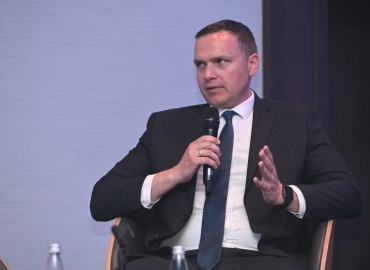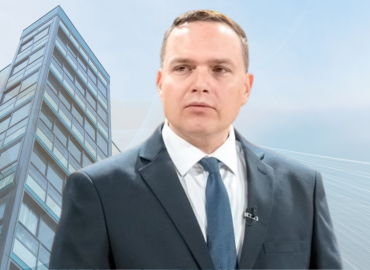


The share of people voluntarily insuring their homes in Bulgaria remains very low, with most doing so only because of mortgage requirements from banks. “Bulgarians are more inclined to insure their cars rather than their homes, even though in the event of a major risk such as an earthquake or fire, the financial losses related to property would be far more significant,” commented Veselin Angelov. He highlighted the affordability of property insurance: for a property insured for BGN 100,000, a policy covering the basic risks may cost just BGN 50–60 per year. By comparison, a casco policy for a car worth BGN 10,000 costs around BGN 500–600. In other words, car insurance is ten times more expensive, yet the maximum compensation it provides is ten times lower.
Even after natural disasters, such as the recent flooding in Montana, there was little interest in purchasing insurance. “The insured properties there can be counted on one hand,” Angelov said, adding that state promises of post-disaster assistance often create a false sense of security. In reality, such aid usually covers only basic cleanup or drainage, but not the actual repairs needed. Another common misconception is that property tax includes insurance coverage, “as it once did years ago, but that is no longer the case,” Angelov explained.
Insured properties are concentrated mainly in larger cities, where mortgages drive the need for coverage. In rural areas, very few houses are insured, often due to unresolved or missing ownership documents, which are a prerequisite for coverage. Illegal or unregulated buildings cannot be insured. “In small villages, people often don’t have building permits. They want to insure their houses, but when asked for the paperwork, it turns out the property is an illegal construction,” Angelov noted.
Property insurance typically covers fire, floods, and natural disasters such as hail, strong winds, and heavy rain. Earthquake is usually an optional add-on. Policies often combine coverage for both immovable property (the structure itself) and movable assets (furniture and appliances), though homeowners can opt to insure only the building. Many also include third-party liability coverage, which protects against damages caused to neighbors — for example, in case of fire or water leakage. Premiums are determined mainly by the insured sum and the risks covered. A property insured for BGN 100,000 only for basic risks may cost BGN 100–200 per year, while extending the insured sum to BGN 200,000 and adding more risks could increase the price to BGN 250–300. There are also cheaper policies starting at BGN 50–70, but they provide limited coverage of about BGN 40,000.
Angelov cautioned that homeowners with mortgage-related insurance should carefully review their bank-offered policy. “Often the coverage corresponds only to the outstanding loan amount, not the full market value of the property. With each installment, the insured sum decreases along with the debt, leaving the homeowner exposed to underinsurance as property values increase,” he explained. In such cases, additional coverage for movable property may also be necessary.
Finally, Angelov warned against attempts to “stack” policies with different insurers to cover a higher property value. “If an apartment worth BGN 200,000 is insured for BGN 100,000 through a mortgage-linked policy, you cannot take another contract for the remaining BGN 100,000 with a different insurer and expect to be fully covered. In case of a disaster, such as the home collapsing in an earthquake, the payout would still total only BGN 100,000, split equally between the insurers,” he clarified.



-370x270-3.png "News image")













-370x270-1.png "News image")














































 (002)-370x270-2.jpg "News image")