


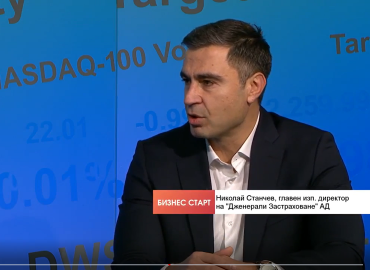
Irina Peycheva, Health Insurance Director at Generali Insurance and member of the ABZ Health Insurance Working Group, commented for Capital on the key aspects of supplementary health insurance in Bulgaria — product features, market logic, and the factors influencing its development.
Against the backdrop of Bulgaria having the highest share of out-of-pocket healthcare payments in the EU, interest in supplementary health insurance continues to grow. More and more employers are choosing to provide healthcare protection for their employees through group policies, while individual health insurance remains underdeveloped.
“Supplementary health insurance is not event-based, like life insurance. It works on the principle of reimbursing expenses and covers a broad range of medical services — from preventive care and outpatient treatment to hospital services,” explained Peycheva.
Group policies dominate
Supplementary health insurance in Bulgaria is predominantly offered as group packages purchased by employers. The reasons are related both to the easier risk assessment within a larger group and to the tax incentives provided.
Group policies typically do not require individual health assessments of the insured persons. The premium is the same for all employees, regardless of age, pre-existing conditions, or risk factors.
Opportunities for individual insurance
Although employer-based schemes dominate, individual products do exist on the market — though still limited. Pricing for these is personalized, taking into account age, health status, and the number of insured family members.
What affects the price?
Pricing depends on several factors — age, health status, claims history, and the scope of coverage. Peycheva shared an interesting trend: younger consumers (aged 20–30) sometimes show higher claim rates than those in older age groups. “One of the big surprises is that people aged 20–30 have higher claims rates than those who are 40–50. Unfortunately, people are starting to suffer health issues at a younger age,” she added.
The importance of informed choice
According to Peycheva, the key to making effective use of health insurance is knowing the conditions of the policy. Customers need to understand the coverage limits — for example, the maximum amount reimbursed for hospital stays, surgical interventions, or medicines. Some policies include limits for specific treatments or only partial reimbursement. Prior approval from the insurer is often required for certain procedures, especially outside the insurer’s partner medical network. Some insurers may also require a second medical opinion. Another important aspect is the existence of waiting periods — usually around six months after taking out the policy — during which certain services are not covered.
Prevention as a strategic priority
Modern health insurance policies increasingly cover preventive care: annual check-ups, screenings, laboratory tests, and consultations with specialists. Some also include additional services such as psychological support, dental care, telemedicine, and vaccinations. This focus is critical, as early diagnosis often leads to more effective and cost-efficient treatment for both the patient and the insurer.
Financial protection for households
Supplementary health insurance also plays an important role in personal financial planning. On the one hand, it protects current income, as a serious illness or accident can cause long-term incapacity and substantial expenses. On the other, it safeguards savings and household assets, which would otherwise be depleted by treatment costs.



-370x270-3.png "News image")












-370x270-1.png "News image")























































 (002)-370x270-2.jpg "News image")