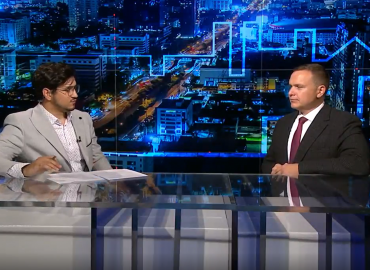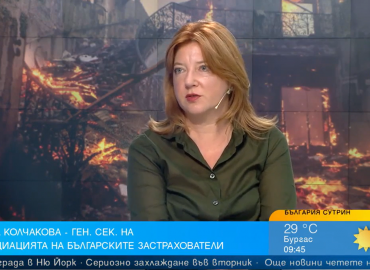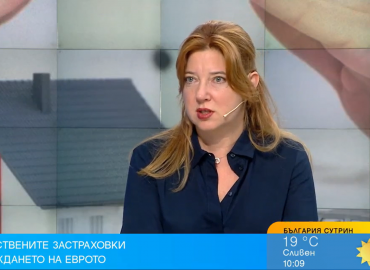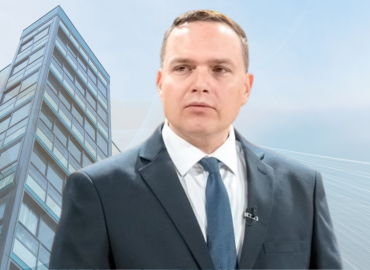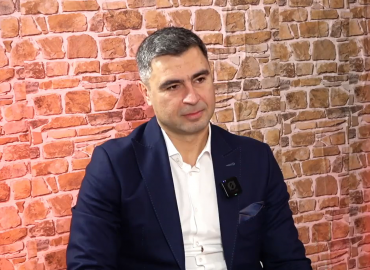

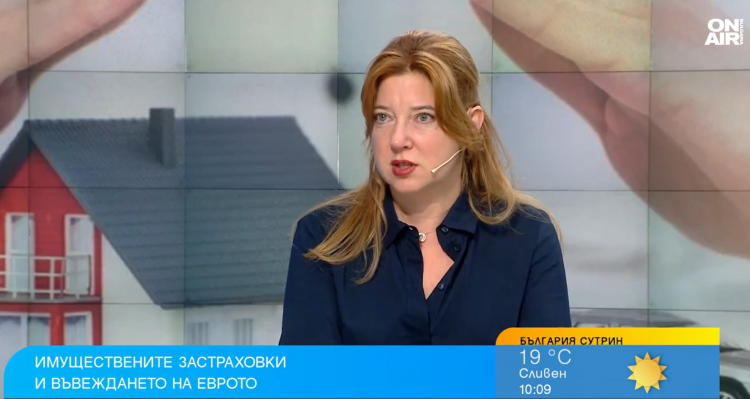
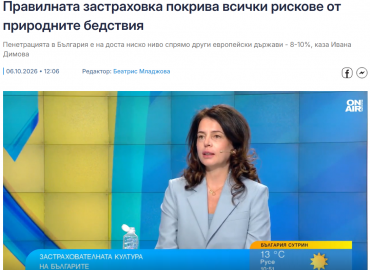
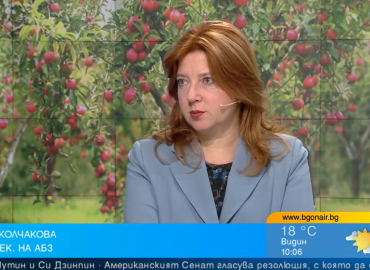
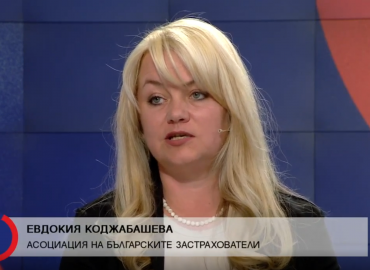
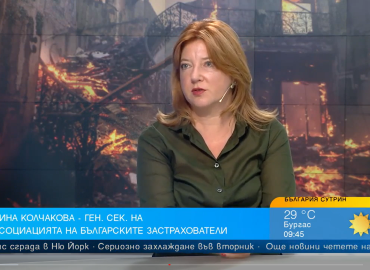
Nina Kolchakova, Secretary General of the Association of Bulgarian Insurers (ABZ), in an interview for the morning program Bulgaria Morning on TV Bulgaria ON AIR, broadcast on 23 May 2025, emphasised that the introduction of the euro will not, in itself, affect insurance prices. “For one year the price will be displayed in both leva and euro, and afterwards only in euro. All insurance companies have adopted and published rules on their websites regarding this process – they will treat their customers fairly and will in no way change prices because of the currency switch,” she explained.
She clarified that policy prices are determined by other factors – the type of risk the insurer assumes and the insured sum, i.e. the potential compensation that may be paid in the event of a claim.
Increasing disasters, but weak insurance coverage
“Bulgaria has the cheapest property insurance in Europe. Every household can afford to insure the roof over their heads. The cheapest policies start at BGN 50, but they provide very limited protection – enough for minor damages, but not for rebuilding after total loss of the property. Policies costing BGN 200–300 offer much fuller protection, covering risks such as earthquake, burglary, etc. This is the annual cost for home insurance and is significantly lower than the CASCO insurance for a car. Yet, unlike homes, 20–30% of cars are insured with CASCO,” said Kolchakova.
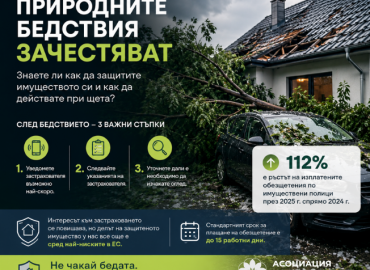
She added that there is a positive trend in property insurance consumption, though growth is slow. The rise is likely driven by the increasing frequency of natural disasters. “In spring and autumn, we see entire settlements devastated – whether by heavy rain, river flooding or hailstorms. Hurricanes and typhoons, unusual for our latitudes, are also being observed,” commented Kolchakova.
Despite these risks, only about 10% of homes are insured. All other losses are borne by households, businesses, the state and municipalities. Even public property, despite legal obligations, is often uninsured or underinsured, according to a report by the Institute for Market Economics commissioned by ABZ.
The need for awareness and clarity when choosing a policy
Kolchakova explained that there are many reasons why people do not insure their property. ABZ studies these reasons, including through surveys, in order to address them and ensure that insurance begins to play its social role, as it does in other countries.
One of the most common reasons cited is reliance on state aid. “This is far from reality. We see how people who lost their homes in a natural disaster are still without shelter, living in caravans. Meanwhile, the insurer promptly pays the sum for which people were insured. Those who had policies have long since rebuilt their homes,” she underlined.
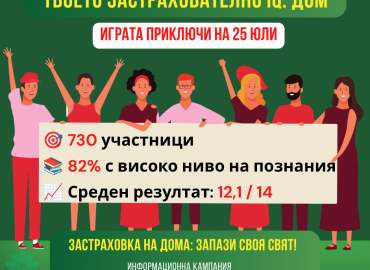
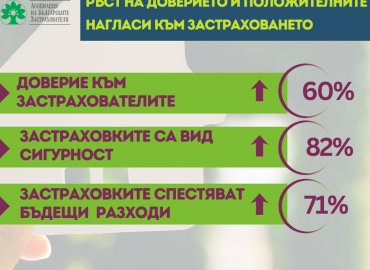
Other myths – such as “insurance is expensive” or “insurers do not pay” – are also being actively addressed by ABZ through educational and informational campaigns.
“Customer dissatisfaction often comes from unmet expectations. And unmet expectations stem from people not knowing the conditions of the policy they purchased, or the policy not matching their actual needs,” Kolchakova stressed.
ABZ supports consumers with practical guidance
Insurers pay claims strictly according to the terms of the policy. The share of claim denials is very small – about 5% of all cases. The main reason for denial is that the claim concerns a risk not covered by the policy. Another source of disappointment is when the amount of compensation is lower than expected – again a matter of the contract terms.
Kolchakova advised: “To be satisfied with your insurance, you must have a policy that matches your needs and whose terms you fully understand. Do not be guided only by the price – as a rule, the cheapest policies provide the lowest level of protection.”
To help consumers, ABZ recently published a new information guide: “3 Questions When Choosing Home Insurance.”




-370x270-3.png "News image")










-370x270-1.png "News image")





































 (002)-370x270-2.jpg "News image")