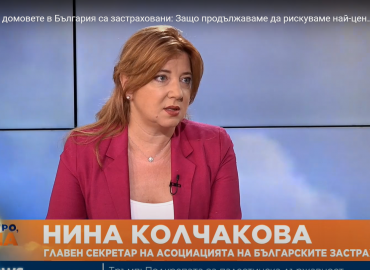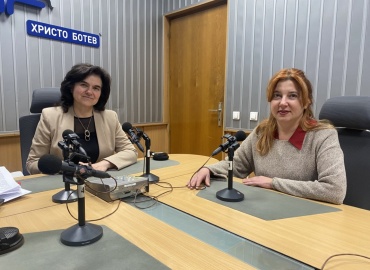


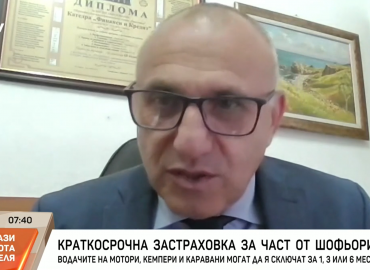
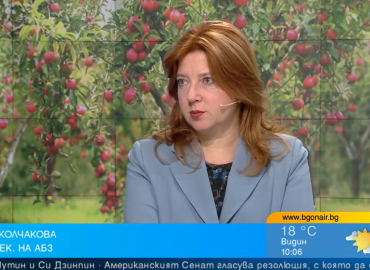
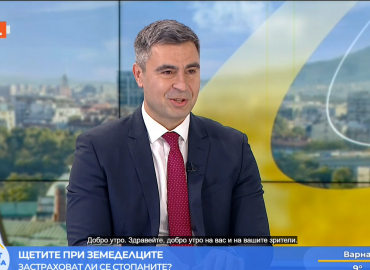
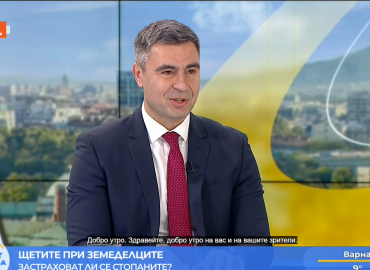
The insurance market in Bulgaria is recording sustainable growth in 2025, with premium income increasing by around 20% on an annual basis and paid claims rising by approximately 25%. This demonstrates the real and growing contribution of insurers to the financial stability of businesses and households, commented Nina Kolchakova, Secretary General of the Association of Bulgarian Insurers, in an interview for Municipal Radio Veliko Tarnovo.
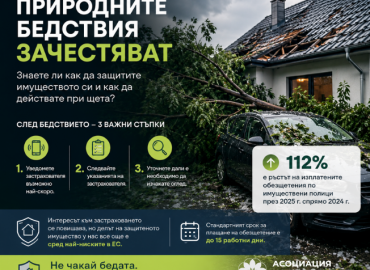
Particularly pronounced is the increase in paid claims under property insurance against fire and other natural disasters, which is a clear indicator of the growing role of insurance as a risk management instrument, especially in the context of climate change. At the same time, premium income in this line of business is increasing by around 20%—a pace comparable to the overall market dynamics.
Strong growth is also observed in health insurance, reflecting both the increasing interest of employers in offering health insurance as part of their social benefits packages and the effect of medical inflation.
The low level of property insurance remains a serious challenge not only for Bulgaria but for the entire Southeast Europe region—from Slovenia to Turkey. Among the main factors are low insurance culture, lack of tradition, and distrust in insurance. In a number of countries, various approaches are already being applied to increase insurance penetration—from mandatory insurance against natural disasters to tax incentives for insured properties.
In Bulgaria, the main focus at present is on information and educational campaigns carried out by the Association of Bulgarian Insurers. According to Kolchakova, the incorrect belief that the state is responsible for full compensation in the event of natural disasters remains widespread. State aid can support the initial response to a crisis but cannot restore property to its pre-disaster condition—this is the role of insurance. Another factor hindering demand is the still low level of awareness regarding property insurance. The Secretary General of ABZ emphasised that property insurance is neither complex nor expensive—its annual cost is usually in the range of BGN 100–300, an amount affordable for a very broad range of households.
During the conversation, Nina Kolchakova also commented on the preparation of the insurance sector for the introduction of the euro. She underlined that as of 1 January 2026, the change for consumers will be entirely technical—the only change will be the currency in which amounts in insurance documents are denominated. The conversion from leva into euros will be carried out automatically by insurers at the official fixed exchange rate, without the need for customers to take any additional action.
Insurance contracts concluded to date will continue to be valid without any change to their terms. No renewal, signing of new contracts, or additional agreements will be required—only the monetary amounts will be presented in euros. Kolchakova stressed that any request made on behalf of an “insurer” to sign new documents citing the introduction of the euro should be treated as suspicious, and that people should report such cases to the Financial Supervision Commission.
The Secretary General of ABZ also pointed out that the transition to the euro itself cannot lead to an increase in the prices of insurance services. Premium levels are not determined by the type of currency, but by other factors—the level of risk and claims under the respective insurance, companies’ costs, required reserves, and the overall economic environment.



-370x270-3.png "News image")








-370x270-1.png "News image")



































 (002)-370x270-2.jpg "News image")