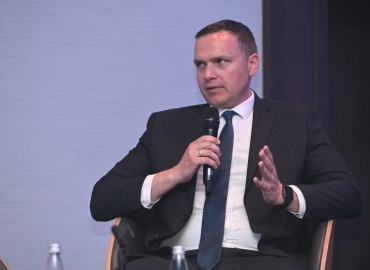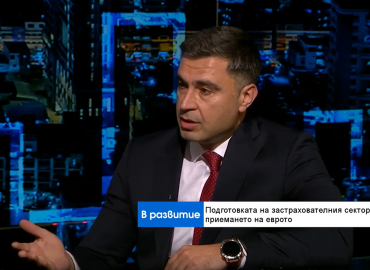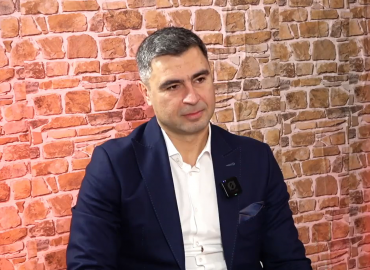


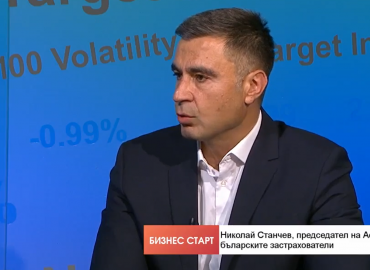
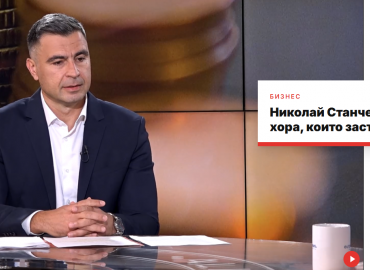
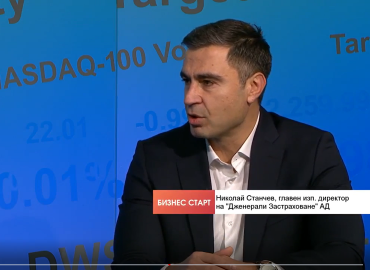
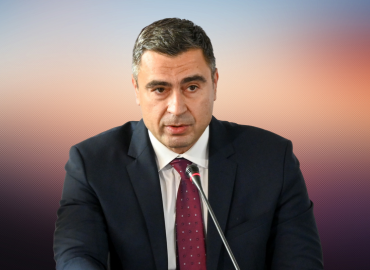
The insurance market in Bulgaria continues to report steady growth, with premium income increasing by around 13% year-on-year as of the third quarter of 2025. This growth is mainly driven by non-life insurance, while life insurance is expanding at a more moderate pace, primarily supported by health insurance. This was stated by Nikolay Stanchev, Chair of ABZ and CEO of Generali Bulgaria, in an interview for the programme Money.bg on TV Bulgaria ON AIR.
“In compulsory Motor Third Party Liability insurance, growth is around 10%, while in Casco it is about 15%. Particularly encouraging is the significant increase in property insurance—around 25%—covering household property, corporate assets and agricultural production,” Stanchev noted.
Positive trends in market structure
Motor insurance traditionally accounts for the largest share of the non-life insurance market. In 2024, this share stood at around 71%, while in 2025 it slightly declined to below 70%. This is due to the faster growth of other segments—property insurance, health insurance and accident insurance. “This is a positive trend, as penetration in non-motor lines remains low and this potential needs to be further developed,” he added.
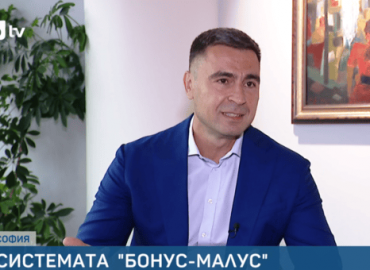
The bonus-malus system
Nikolay Stanchev explained that the bonus-malus system has been used in Bulgaria for years, but only internally within insurance companies, as they previously had access only to claims data of their own clients. The difference now is that, following amendments to the Insurance Code last year, insurers will have access to claims data across the entire market through the registers of the Guarantee Fund. This means that even when a client is new to a company, it will have access to their claims history.
“This is a much fairer approach—drivers with fewer claims will be able to benefit from more favourable terms, while those with more incidents will pay a higher premium,” Stanchev said.
Two ordinances of the Financial Supervision Commission are expected to be adopted to regulate insurers’ access to the Guarantee Fund registers. This will be followed by a transition period for adapting the systems of both the Guarantee Fund and insurance companies. The process is expected to be completed by mid-year.
Regarding the main factors affecting motor insurance prices, Stanchev pointed to the frequency of road traffic accidents, inflation, and the increasing size of compensation for non-pecuniary damages.
Property insurance remains underpenetrated
Despite the growing interest in property insurance, the share of insured homes in Bulgaria remains low—below 10%. “The process is slow because it is linked to people’s awareness that this type of insurance helps them manage risk effectively. Losing one’s home due to fire or a natural disaster is a very serious event that can severely affect a person’s financial situation,” Stanchev noted. He added that the development of this segment could also be supported by a national home protection strategy, in which insurance plays a key role.
Rising interest in agricultural insurance
Interest in agricultural insurance is also increasing, supported by a European programme that finances up to 70% of farmers’ insurance premiums. “Last year saw a significant increase in interest in this type of insurance. Nevertheless, around 25–30% of the programme’s funds remain unutilised,” Stanchev said.
“Insurers don’t pay” – a persistent myth
According to him, one of the most widespread misconceptions among consumers is that insurers do not pay claims. He cited an example from his company’s practice of a payout exceeding EUR 1 million to an agricultural producer. “Claim rejections account for a very small share—around 5% of all cases. In over 90% of these cases, the reason is that the respective risk was not covered by the policy,” Stanchev explained. He therefore advised clients to seek guidance from insurance consultants and to choose coverage based on their needs, rather than price alone.
Health insurance remains a leading employee benefit
Health insurance also continues to grow, with the market increasing by around 25% in 2025. This growth is largely driven by rising healthcare costs, i.e. medical inflation, Stanchev explained.
At present, health insurance is the most widely offered employee benefit, with around 86% of large companies providing such coverage to their employees. Growing interest is also being observed among small and medium-sized enterprises.
At the same time, individual health insurance policies still account for a very small share. “For the principles of insurance to function effectively, this product needs to become more widespread,” Stanchev emphasised.



-370x270-3.png "News image")






-370x270-1.png "News image")













































 (002)-370x270-2.jpg "News image")