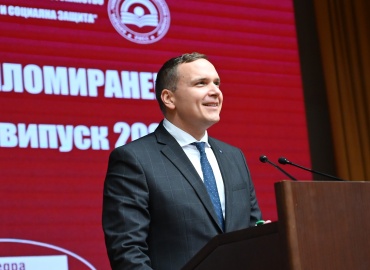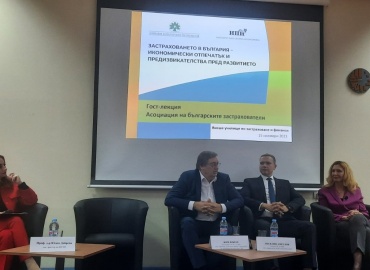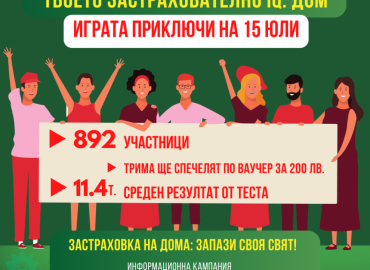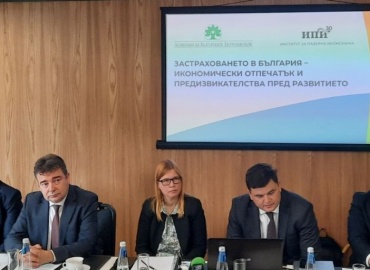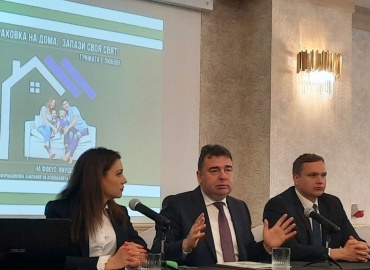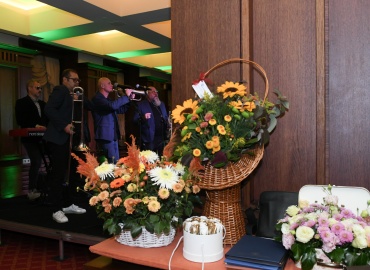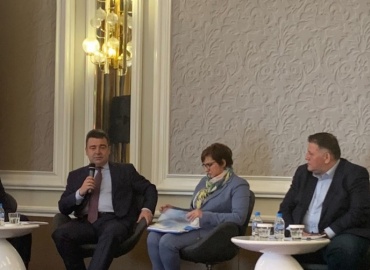

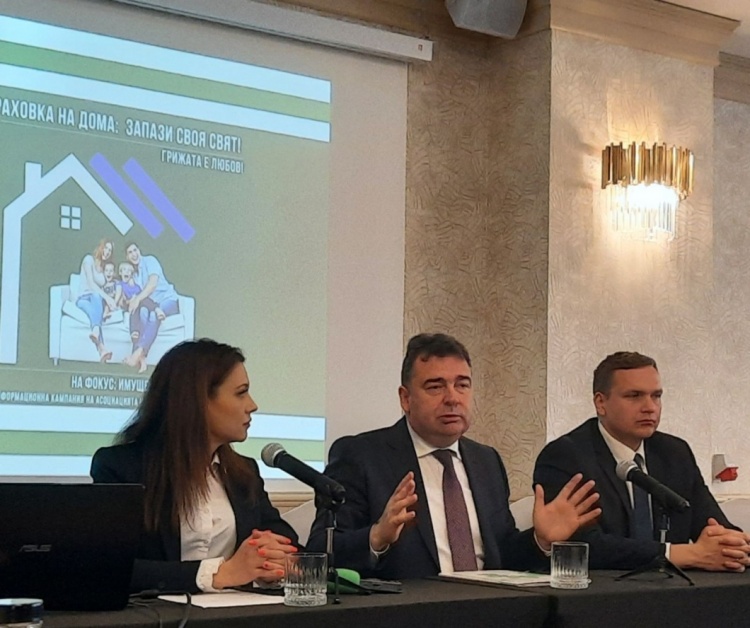
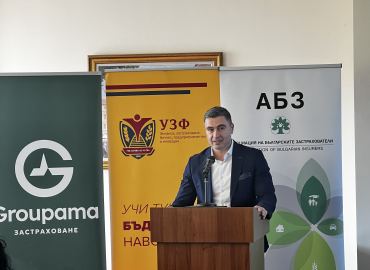
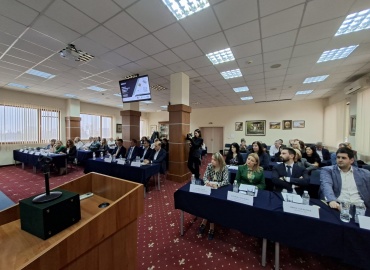
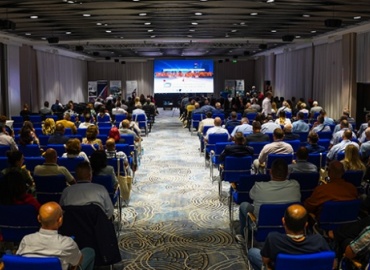
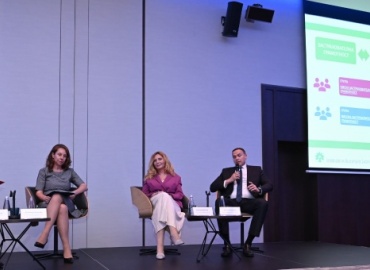
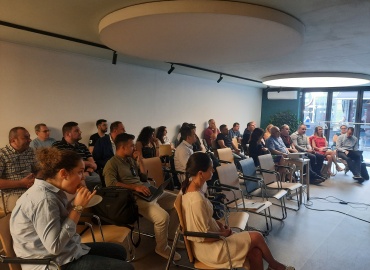
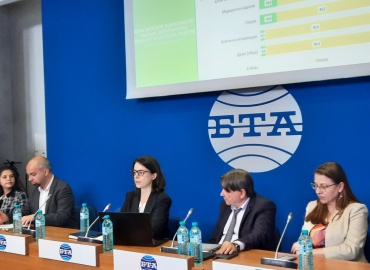
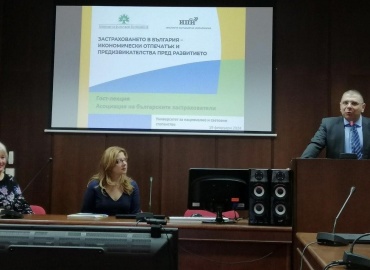
What are the meaning and benefits of the protection offered by property insurance in light of the intensifying increase in climate and seismic disasters? How is the property insurance market developing, how can consumers choose the right home insurance policy, and why is this important? These and other questions were discussed during the business breakfast 'In Focus: Property Insurance', organized by the Association of Bulgarian Insurers (ABI) on April 11, 2023. The event was held as part of ABI's information campaign 'Home Insurance: Protect Your World.' Speakers at the event included Konstantin Velev, Chair of ABI’s Management Board, Veselin Angelov, Member of the Management Board, and Desislava Nikolova, Senior Analyst at MoitePari.bg.
In his introductory remarks, Konstantin Velev stated that globally, natural disasters are increasing in frequency and intensity, and economic losses from them are also rising. According to Swiss Re data for 2022, economic losses from catastrophic events – natural or man-made – amount to USD 284 billion, about 23% more than the 10-year average of USD 220 billion. Insured losses amounted to USD 132 billion.
Bulgaria is highly exposed to natural hazards, making disaster resilience a national priority. Events such as floods, earthquakes, and hail have been identified as particularly risky. Between 2010 and 2019, damages from disasters amounted to USD 1.1 billion, which equals about 0.2% of Bulgaria's GDP for the 2011–2019 period (source: NSI). However, Bulgaria faces a clear issue of underutilizing insurance mechanisms for covering disaster-related losses. According to EIOPA, the share of insured properties against all natural disasters in Bulgaria is just 2% over the last 40 years, compared to 22% on average in Europe. The practical consequence of this situation is that the cost of recovery from adverse events is borne by the state budget, businesses, and households, instead of transferring the risk to insurers. The structure of premium income and paid claims in Bulgaria also shows a dominance of motor insurance, mainly from mandatory insurance, with negligible coverage in other lines of business. Bulgaria has the lowest share of property insurance in the EU – 14% in 2020, compared to the European average of 37%. According to ABI's unofficial estimates, the share of insured homes and agricultural properties is no more than 10%, putting the population at significantly higher risk than other EU citizens. Premium income under 'Fire and Other Perils' has grown by about 12% annually over the past three years. The growth rate is good but comes from a low base. For the same period (2019–2022), the growth in claims paid was higher – 16%.
An interesting perspective on consumer attitudes and awareness regarding home insurance, as reflected in an online survey by MoitePari.bg, was presented by Desislava Nikolova. The majority of respondents (85%) view property insurance as a way to protect their financial stability and ownership in case of a risky event, which is the main reason for purchasing a policy. Other top reasons include the risk of natural disasters, and motivating factors may also be the affordability of insurance. The amount respondents can allocate annually for home insurance ranges between BGN 40 and 150. According to the results, urban residents of working age largely insure their homes (60%), mostly voluntarily (88%), and not due to mortgage bank requirements. However, consumer awareness about property insurance remains problematic and may be a barrier to uptake. A full 67% of respondents do not consider their knowledge of property insurance sufficient. Even among insured homeowners, nearly one-third (30%) are only somewhat familiar with their policy terms. This lack of awareness could negatively affect customer satisfaction.
In the subsequent discussion, Veselin Angelov noted that persistent negative perceptions continue to pose barriers to insurance uptake, although they are not supported by objective facts. One such perception is that insurers do not pay claims – an opinion shared by 28–30% of respondents in both the presented survey and an ABI survey from 2020. Yet only 5–10% of policyholders have ever experienced a denied claim. In almost all cases, the reason for denial was that the risk in question was not covered or was excluded in the policy. Hence, it is important to work toward improving public awareness, both through insurers and the media. The main advice is for consumers to carefully review their policies and adapt them to their specific needs if necessary.
There are two main types of property insurance on the market – so-called 'limit-based' policies with fixed insurance amounts, and policies that reflect the real value of the property, tailored to the customer – explained Konstantin Velev. When choosing home insurance, two main rules should be followed: the consumer must identify the main risks to their movable and immovable property, and set the insurance amounts accordingly. The market practice is to offer a basic package of coverages, typically mandatory, which clients can enhance with additional packages or risks based on their preferences. The basic package usually includes fire, natural disasters (storm, hurricane, hail, flood, landslide, heavy snow or ice), plumbing damage, vandalism, vehicle impact, clearing costs, and others. Optional coverages may include theft, earthquake, glass breakage, third-party liability, and more. The selection of additional risks should match the individual's circumstances. For instance, if there is no expensive equipment or similar items in the home, theft coverage may be unnecessary. It is also important for people to understand what each risk means. Sometimes, damage from plumbing failures is mistakenly claimed under 'flood', which actually refers to a natural disaster.
Regarding home insurance associated with mortgage loans, Veselin Angelov and Konstantin Velev advised consumers to take the time to review policy terms and seek additional protection if needed. Consumers have the right to select an insurer and insurance policy for their home. Banks typically offer two approaches to determining insurance sums – either reflecting the real value of the property or equating to the outstanding loan balance. While the latter is cheaper, it can put consumers at risk in the event of significant property damage. It is also important to note that such policies generally do not cover movable property.
Property insurance prices are very affordable, and insurers often offer promotions, further lowering premiums. People should be aware that prices depend directly on the number and type of covered risks and their limits. Naturally, cheaper policies provide more limited protection, so personal judgment is crucial when selecting coverage. For 'limit-based' policies, prices may range from BGN 30 to 80 per year. Consumers should note that such coverage may be insufficient for major losses, like total property destruction from an earthquake. Still, in most cases, the sum is enough to cover smaller-scale damages. For 'real value' policies, the price depends on the property’s features, selected coverages, and insured sums. For example, a policy for an apartment in Sofia might cost around BGN 170–300 per year.

-370x270-1.png "News image")

























-370x270-1.png "News image")