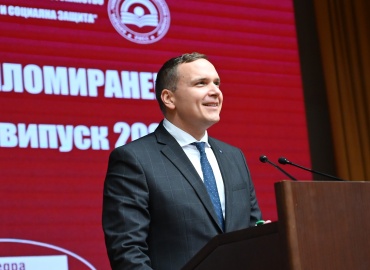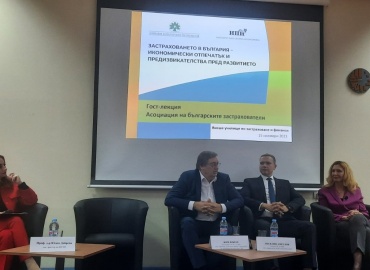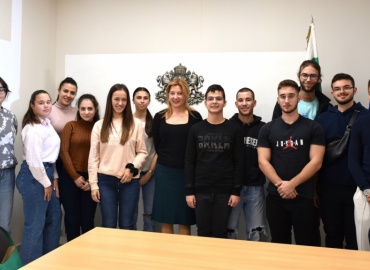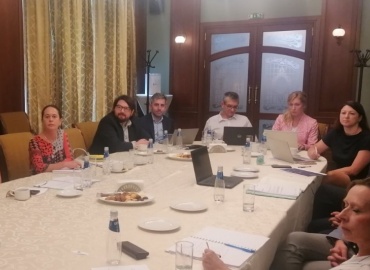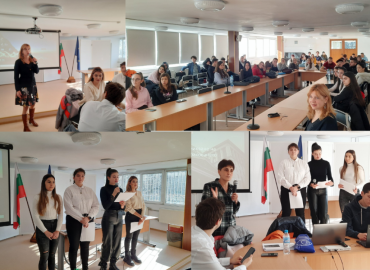

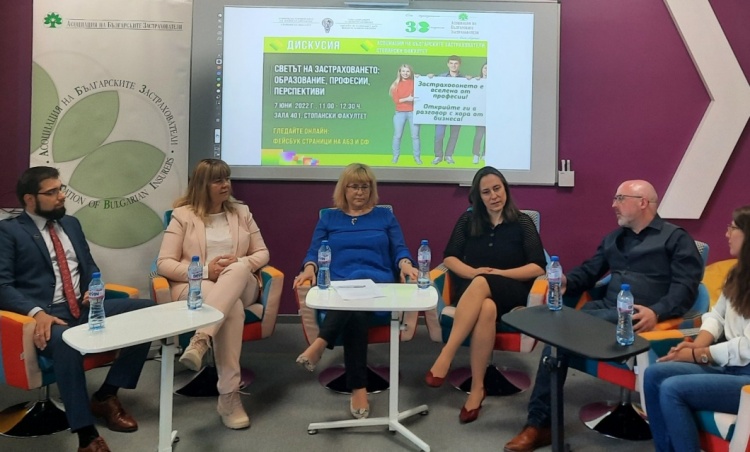
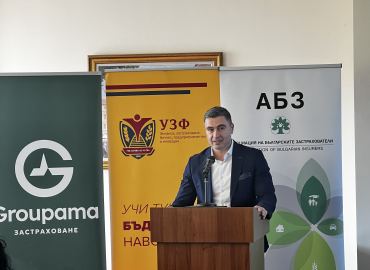
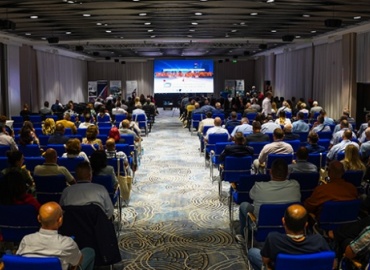
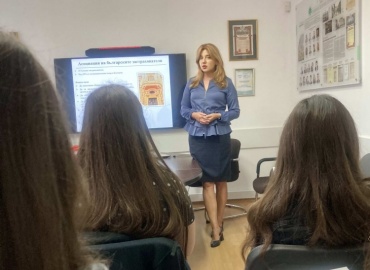
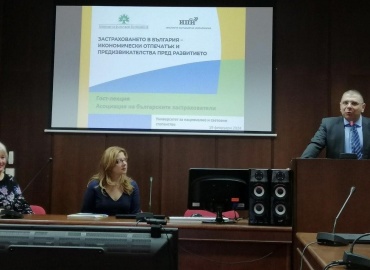
“The insurance industry is ready to welcome young professionals immediately after graduation, and the career opportunities for development are significant—not only for students with an economics background, but also for those from a wide range of academic disciplines.” With these words, Konstantin Velev, Chairman of ABZ, addressed the students during the opening of the discussion “The World of Insurance: Education, Careers, Perspectives”, held on 7 June 2022. He emphasized that the insurance sector is undergoing rapid technological transformation and development, and that the openness of young people to innovation is precisely the potential that will drive the industry forward.
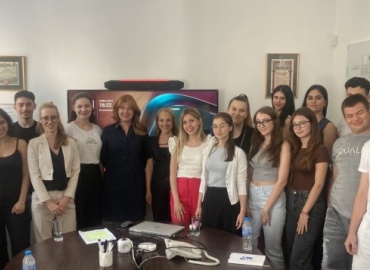
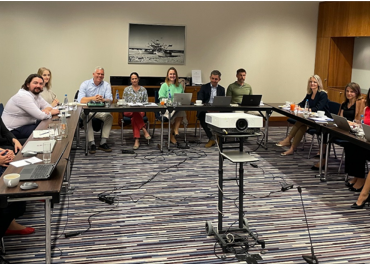
The event was co-organized by the Association of Bulgarian Insurers (ABZ) and the Faculty of Economics at Sofia University “St. Kliment Ohridski”. A welcome address to the students was also delivered by the Dean of the Faculty, Dr. Atanas Georgiev.
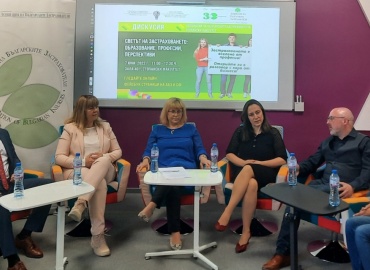
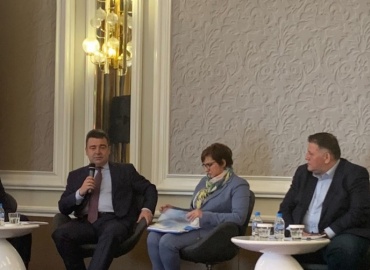
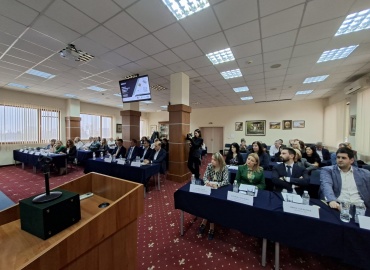
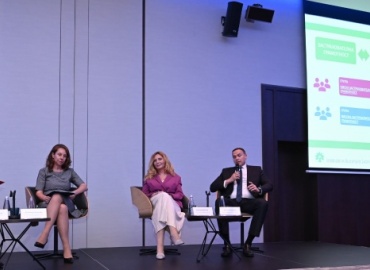
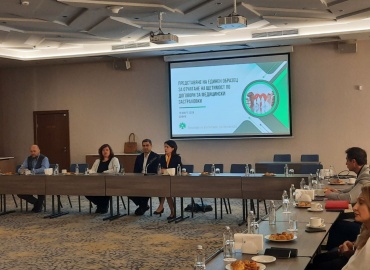
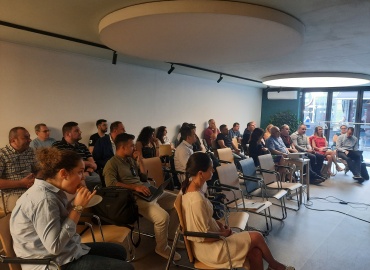
During the subsequent panel discussion, leading professionals from the insurance industry shared insights into their personal career paths, the role of education and academic institutions, and what it takes to build a successful professional trajectory in insurance. Participants included:
The discussion was moderated by Gergana Rakovska, Chair of the Business Foundation for Education.
Diverse pathways in insurance
Svetla Nestorova outlined the career paths in insurance as follows:
“We look for personalities rather than specific professionals. Here with us today are a quantum physicist, a clinical psychologist, a geotechnical engineer, and a mathematical economist—all working in insurance. Insurance is not a profession in the narrow sense, it is a field in which almost any profession can find a place.”
She advised students, regardless of their area of study, to explore the opportunities the insurance sector offers, as it brings together diverse professionals whose collaboration generates exciting new projects and constant learning.
“Universities must foster independent minds and value systems,” she added, emphasizing that academic institutions should prepare individuals not just for the next three years, but for the next 50.
What does a Risk Engineer do?
Dr. Eng. Teodor Masov explained that risk engineering offers a broad perspective and that mathematics lies at the core of the profession.
“Risk engineers rarely wear suits. They are where the risk originates—at the factory, at the construction site. They are the face of the insurer on the ground.”
Their role involves gathering and analyzing data about hazards, transforming that information into quantified risk assessments, and supporting insurers with models for estimating potential losses.
“A curious and thinking mind is key. Not every engineer becomes a good risk engineer—continuous development and interest in new technologies is essential.”
The Actuarial Profession
Marionela Stoilkova presented the actuarial profession and what it takes to succeed in it.
Actuaries combine knowledge from fields like mathematics, statistics, accounting, investments, IT, and marketing, and must be able to justify assumptions and results analytically.
“Insurance is based on risk assumption, and that risk must be accurately assessed.”
Actuaries calculate premium rates that must cover all risks while ensuring company profitability.
“Set high goals for yourselves, and make sure they are backed by knowledge and a drive for constant improvement,” she told the students.
From Physics to AI in Insurance
Barry Haycock shared his professional journey from physics to AI applications in banking and insurance.
He explained that artificial intelligence and big data are just beginning to be applied in the insurance sector and that digital experts work closely with practitioners to identify key problems and develop solutions.
Technologies like telematics can help insurers offer personalized products and incentivize safe driving behavior.
“I look for team members with diverse skills, but above all—engaged, adaptable, and curious minds,” he said.
Final remarks
In closing, moderator Gergana Rakovska summarized the discussion’s main messages:
“Not only should universities create value, but students must also be proactive, curious, and take initiative. The global world offers vast opportunities—use them to build the future you want.”
-370x270-1.png "News image")








-370x270-1.png "News image")