


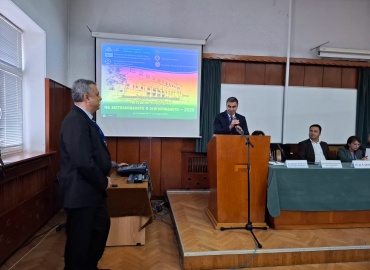
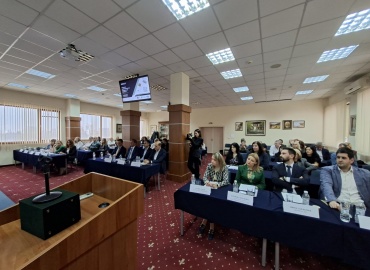
The Association of Bulgarian Insurers (ABZ) took part in an event organised by the Sustainability Committee of the British Bulgarian Business Association (BBBA) and the Green Finance & Energy Centre at the Bulgarian Stock Exchange, dedicated to the impact of climate change, technological developments and regulation on the financial sector. The forum was held in Sofia on 11 June under the theme “Future and Sustainable Business: Climate, Technology and Regulation as a Competitive Advantage for Banks and Insurers.”
The event brought together representatives of the banking and insurance sectors, businesses and experts to discuss how financial institutions can respond to accelerating climate, technological and regulatory changes and turn them into a source of sustainable growth and competitive advantage.
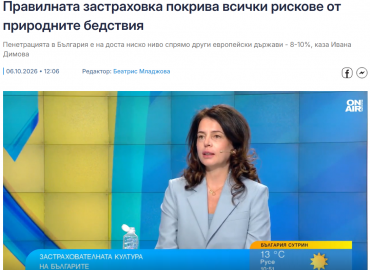
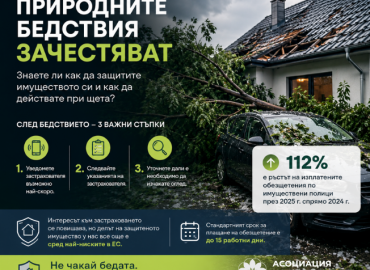
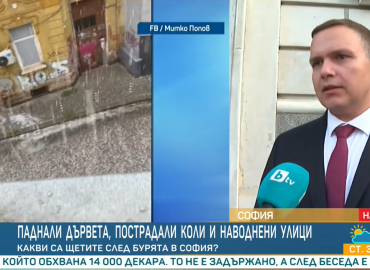
One of the highlights of the programme was the presentation “Opportunity: How Insurers Turn ESG Into a Business Advantage” delivered by Loredana Artenie, UNIQA Sustainable, SEE6. She stressed that climate change is no longer a matter of future scenarios but a reality with a direct impact on companies' economic performance and financial results. According to Loredana Artenie, climate risks have long been integrated into insurers' risk assessment models, while the role of the insurance sector extends beyond risk transfer to supporting clients in risk prevention. She also pointed out that around 80,000 people are affected by floods in Bulgaria each year and that the country remains among those with the lowest levels of insurance coverage for climate-related losses in Europe.
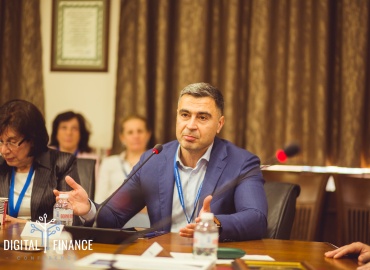
The forum also included the insurance panel “Beyond the Loss Ratio: Climate, Capital and the Future of Insurance”, featuring Veselin Angelov, Member of the Management Board of ABZ and Chief Executive Officer of Allianz Bulgaria; Polina Dikova from ABZ; Stanislav Ivanov from Generali Bulgaria; and Yulian Popov, former Minister of Environment and Water.
One of the central topics of the discussion was the growing protection gap in insurance coverage against natural disasters. Polina Dikova noted that climate change will increasingly raise questions about the affordability and availability of insurance in high-risk areas. She pointed out that mechanisms for sharing catastrophe risk are already being discussed at the European level and emphasised that increasing insurance coverage will require stronger efforts to raise awareness of the benefits of insurance, as well as a more active role for the state in encouraging insurance protection.
The discussion also explored the relationship between sustainability and risk assessment. Veselin Angelov highlighted the importance of financial and insurance literacy, noting that companies investing in sustainable solutions and effective risk management are more attractive from an insurance perspective. He also suggested that the state could encourage higher levels of property insurance through appropriate incentive mechanisms.
Access to reliable data emerged as another key topic. Stanislav Ivanov pointed out that the growing number of natural disasters worldwide is driving up reinsurance costs and making risk assessment increasingly complex. According to him, the limited availability of reliable real-world data makes insurers' work more difficult and increases their reliance on predictive models.
In the same context, Yulian Popov stressed the need for climate and meteorological data held by different public institutions to be digitised and made more widely available for risk management purposes. In his view, the insurance sector plays an important public role in reducing the consequences of natural disasters, and its expertise should be used more actively in the development of public policies in this area.
The discussion highlighted the need for closer cooperation between the insurance sector, public institutions and businesses on issues such as climate risk prevention, access to data and strengthening resilience to natural disasters.





-370x270-3.png "News image")
















-370x270-1.png "News image")























































 (002)-370x270-2.jpg "News image")