
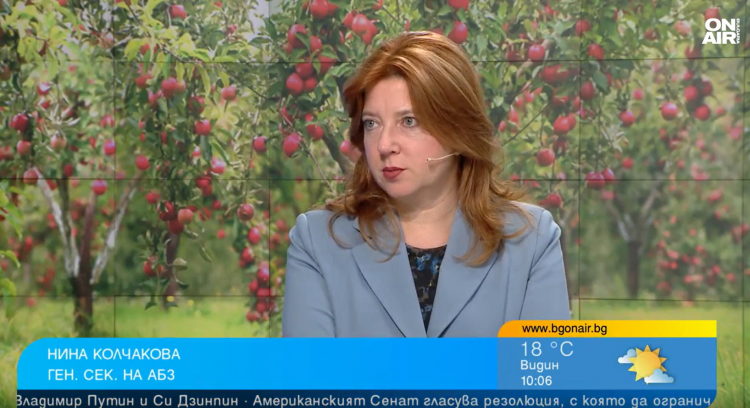
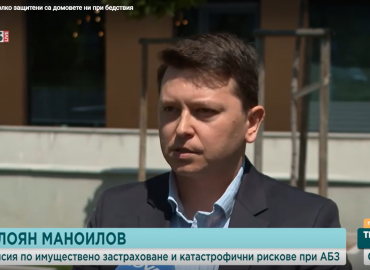
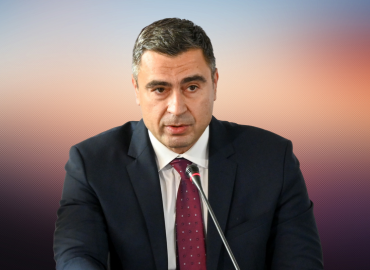
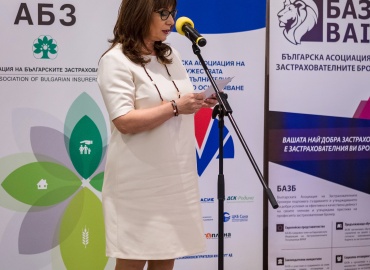
An increasing number of farmers are insuring their agricultural production, yet the level of insurance coverage remains too low given the growing frequency of climate-related risks. This was stated by Nina Kolchakova, Secretary General of the Association of Bulgarian Insurers (ABZ), in an interview for the Bulgaria Sutrin programme on Bulgaria ON AIR on 20 May 2026.
Nina Kolchakova explained that the new scheme administered by the State Fund Agriculture and financed through European funds has had a particularly positive impact. Under the scheme, the state provides a non-repayable subsidy covering 70% of the premium for agricultural insurance policies. However, she noted that the increased interest is driven not only by the favourable financial conditions, but also by the simplified administrative procedure for applying for and receiving the subsidies.
Insurance companies offering agricultural insurance have reported significant growth in this line of business, with some recording increases in premium income of between 50% and 60%.
“This is indeed a very positive development, but the reality is that growth needs to be several times greater in order to achieve adequate insurance coverage of agricultural land in Bulgaria,” Nina Kolchakova said.
According to Nina Kolchakova, the main reason behind problematic cases is the gap between farmers’ expectations and the actual terms and conditions of their insurance policies. Producers often assume that a policy covers every possible type of loss without having familiarised themselves with the policy conditions in detail. She suggested that this may be due to shortcomings in the sales process. For example, policyholders may not have been clearly informed about which insured events are covered or that agricultural insurance compensates production costs rather than the market value of the harvested crop.
In this context, Nina Kolchakova encouraged farmers to discuss all aspects of their business, crops and risk exposure with their insurer or insurance broker before taking out a policy. This will help them obtain insurance that genuinely meets their needs and ensure that they know what to expect in the event of a loss.
“Insurers want to meet their customers’ expectations and ensure that they are satisfied with the protection provided by their insurance policy. This also helps strengthen trust in insurance,” she said.
For agricultural insurance, it is particularly important that the insurer is notified as quickly as possible after a loss occurs so that an inspection of the damaged crops can be arranged.
Nina Kolchakova explained that loss assessments are carried out by specialist agricultural engineers and that, if farmers disagree with the assessment, they may also appoint their own experts. Claim payouts are made within 15 days after the insurer has received all documents required for the claim.
Some agricultural risks are so severe and have such a high probability of occurring that they cannot be fully covered by the insurance sector through standard insurance mechanisms. Nina Kolchakova explained that insurance is designed by its very nature to cover uncertain events rather than events that are virtually certain to occur.
Examples of such risks in agriculture include drought and late spring frost. If these risks were included in standard insurance coverage, premiums would have to be set at a level corresponding to the expected losses. This would make insurance unaffordable for farmers and economically unsustainable as a business model.
For this reason, many countries use public-private partnership mechanisms to address such “uninsurable” risks. In addition to insurance premiums, these mechanisms include public funding through guarantee schemes, insurance pools or reinsurance arrangements. Their purpose is to ensure that agricultural producers can receive compensation for severe climate events that cannot be fully covered by conventional insurance.
At present, the Ministry of Agriculture is considering the establishment of such a guarantee scheme with European funding.



-370x270-3.png "News image")









-370x270-1.png "News image")


















































 (002)-370x270-2.jpg "News image")