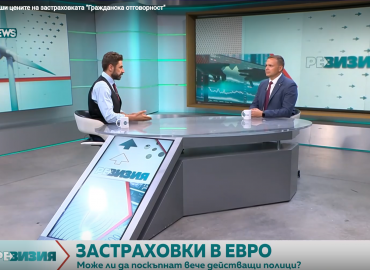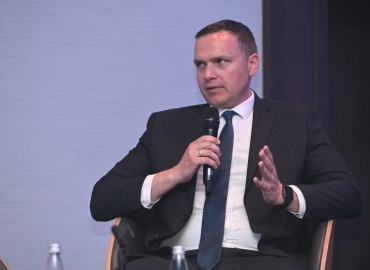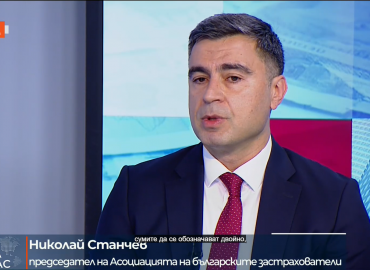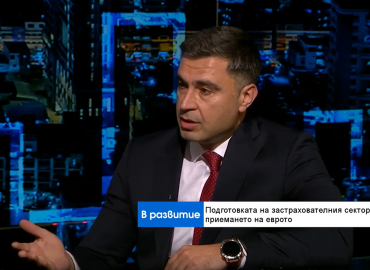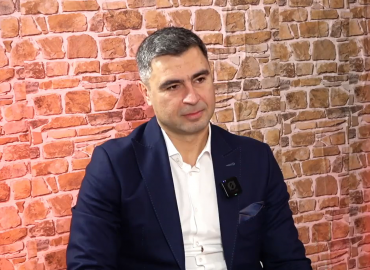

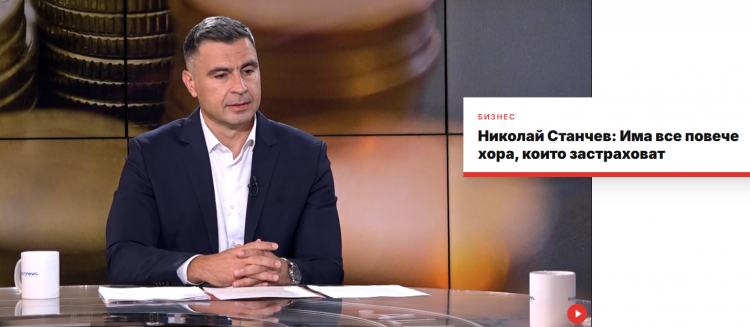
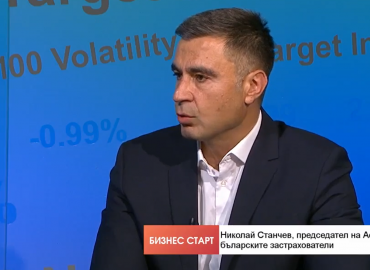
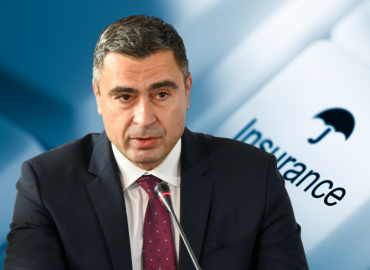
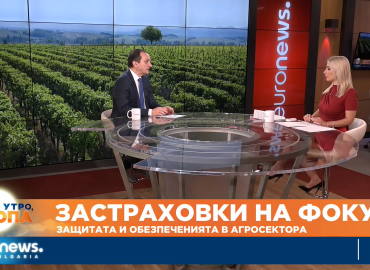
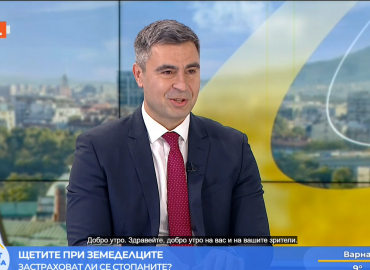
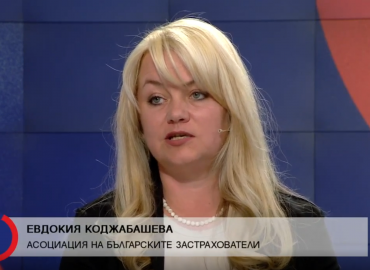
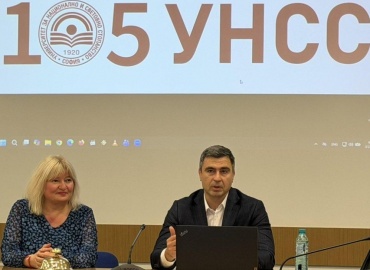
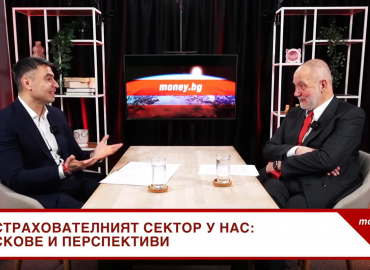
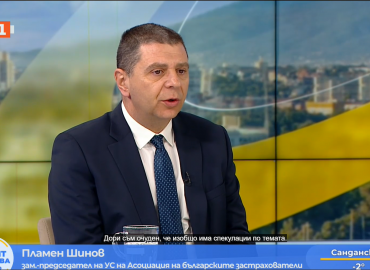
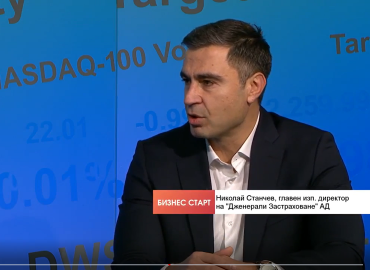
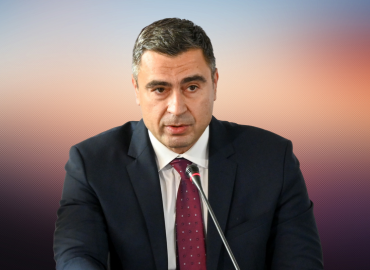
In recent years we have seen steady growth in the insurance market, with more and more people purchasing policies. Insurance is becoming more popular, and according to statistical data, insurance premiums increased by 12% last year compared to 2024. Motor insurance still dominates, but not only in the line of Mandatory Third-Party Liability (MTPL), and more drivers also purchase Casco insurance. In life insurance, which accounts for about 16% of the total market, there is great potential for development, commented Nikolay Stanchev, Chairman of the Association of Bulgarian Insurers (ABZ), in the Primetime program on EuronewsBulgaria.
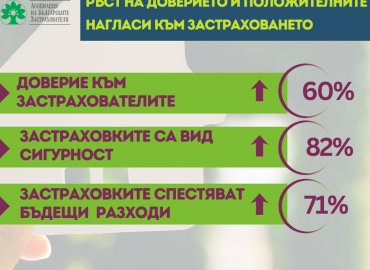
Trust in the insurance sector is increasing
The results of a national survey conducted in May show an increase in trust in the insurance sector compared to 2020.
“We are seeing more and more people getting insured, in all segments and lines– both in motor and property insurance,” said Nikolay Stanchev. Another conclusion is that many people in Bulgaria do not purchase insurance due to a lack of information and insufficient insurance culture, which is a problem that cannot be solved quickly. Insurers also play a role in raising financial literacy. ABZ has implemented many awareness campaigns about the benefits of insurance. Currently, an information campaign for property insurance is underway under the motto “Don’t wait for disaster. Insure your home now.”
Informed choice is key when insuring your home
Nikolay Stanchev advised homeowners when choosing home insurance to consider their individual protection needs – what type of property it is, what covers are important to them, whether only the building will be insured or also the property inside, and whether the insurance amounts are sufficient. Typically, property insurance policies offer a basic package of risks – fire and natural disasters – to which additional covers can be added according to specific circumstances. For example, if the home is in an apartment block, it would be appropriate to include “third-party liability”. “This way, even if you flood your neighbors, the damage will be covered by the insurer, not by you,” explained Nikolay Stanchev.
According to statistics from the Financial Supervision Commission, property insurance accounts for about 20% of the market, including insurance for homes, business property, and agricultural crops. In 2025, premium revenue from property insurance increased by more than 20% compared to the previous year. The growing interest is also due to the increasing frequency of natural disasters, including hailstorms that cause severe damage to agricultural production. Nikolay Stanchev recalled the severe hailstorms in Southeastern Bulgaria in May 2025, which affected many farms. Insured producers received compensation and were able to restore their activities. Similar damage was recently caused in the Yambol region, where insurance coverage could once again prove decisive for the survival of the affected farms.
What prevents people from purchasing insurance
The national survey highlights several main reasons why people do not purchase insurance. One of them is the perception that the price is too high, which is largely related to insufficient awareness of real price levels. Nikolay Stanchev gave the example of insurance for an average home, which can cost around €40–60 per year, depending on the type of property and the selected covers.
Another barrier is the belief that an adverse event will not happen to that particular person or their property. However, the increasing number of natural disasters and other incidents shows that risk should not be underestimated.
The survey also refutes the widespread misconception that insurers do not pay claims. The data shows a significant difference between general public attitudes and the real experience of people who have insurance and have suffered damage. A total of 83% of respondents who received compensation were satisfied with its amount. Only 5% of claimants did not receive compensation, with the most common reasons being that the specific event was not included in the coverage, deadlines for notification were not met, or the required documents were not provided.
Nikolay Stanchev advised consumers when choosing insurance to inform themselves in detail about the covers, rather than being guided solely by price. A lower premium is usually associated with more limited coverage. It is important for customers to know in advance how and within what deadlines a claim is filed, what documents are required, and what are the conditions for paying compensation. More and more consumers are looking for information online, but when purchasing a policy, it is important to ask their specific questions to the insurer or insurance intermediary. This way, they can clearly understand what product they are buying, what risks are included, and under what conditions the coverage applies.
Interest in life insurance is growing
Interest is also being observed in life insurance. Among the popular products are life insurance policies linked to investment funds, which combine insurance protection with an investment element, as well as insurance linked to loans. Policies with coverage for accidents and illness are also in demand, often purchased by employers on behalf of their employees.
Current topics in motor insurance
The penetration of MTPL insurance for motorists remains the highest. Nikolay Stanchev also commented on some of the common misconceptions about this type of insurance. One of them is that prices are increasing significantly. The data shows that in 2025 the average price of a policy for passenger cars increased by about 3% compared to 2024. By June 2026, the increase compared to December 2025 is also about 3%, which does not indicate a sharp price increase.
However, there are separate risk segments, including motorcycle insurance. In the past policies were mostly paid in installments, with over 80% of motorcycle owners paying only the first two installments and effectively treating the insurance as seasonal. Although motorcycles are usually used only part of the year and some insurers offer seasonal policies, current legislation requires every registered motor vehicle to have valid MTPL. After a six-month policy expires, the owner must either renew it or deregister the motorcycle. The issue is currently being discussed in a working group with the participation of representatives of motorcyclists and ABZ, which is considering options for changes related to seasonal insurance.
Nikolay Stanchev also commented on the case of ZAD “DallBogg: Life and Health,” noting that it has an unfavorable reputational effect on the entire sector. After the expiration of their current policies, customers can purchase a new insurance policy with another insurer.
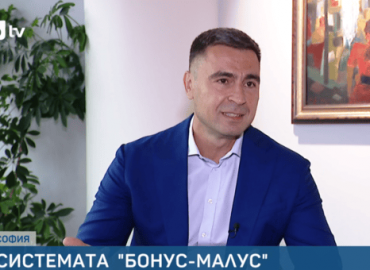
The introduction of a unified “bonus-malus” system for all motor vehicles is also forthcoming, said the Chairman of ABZ, explaining that the necessary regulations have already been adopted and after the envisaged adaptation period the system will begin to apply. The “bonus-malus” principle is already used by insurers, but until now each company has had access only to information about the claims of its own clients. With the introduction of the common system, insurers will have access to data on the claims caused by the driver regardless of which company they were insured with. Thus, drivers without claims will be able to receive a discount, while those with registered claims will pay a higher premium.



-370x270-3.png "News image")





-370x270-1.png "News image")


































 (002)-370x270-2.jpg "News image")